Between 1888 and 1930, the Hungarian architect Lipót Baumhorn designed more than twenty synagogues across the Austro-Hungarian lands — a body of work without parallel in the history of European synagogue architecture. From the industrial cities of the Great Hungarian Plain to the market towns of Transylvania and the Banat, Baumhorn's buildings gave physical form to the ambitions of a Jewish bourgeoisie at the height of its confidence: communities that had won emancipation within living memory, were building fortunes in commerce and industry, and wanted places of worship that announced, in stone and glass and gilding, that they belonged.
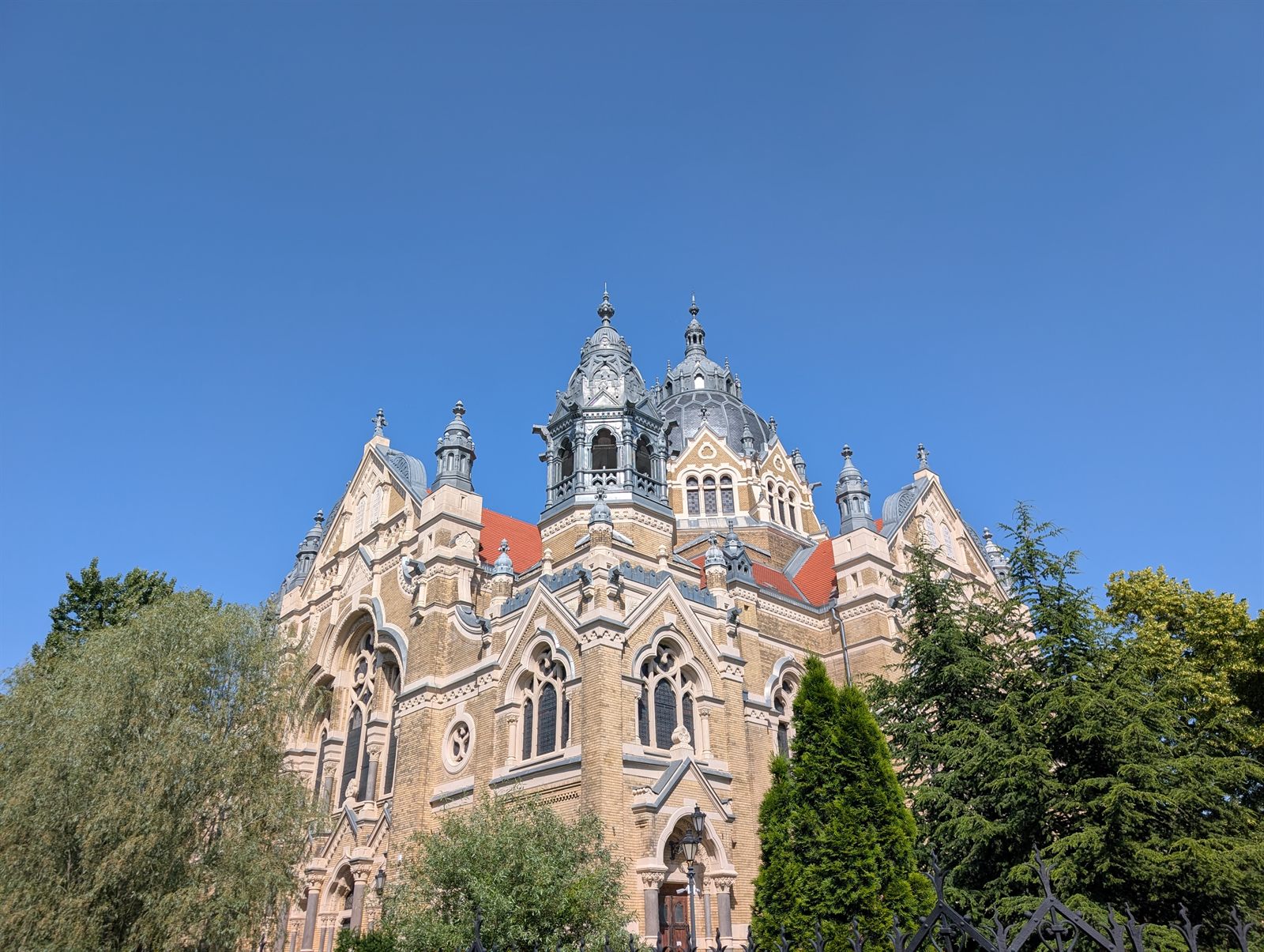
The synagogue as civic statement
To understand Baumhorn's work, you have to understand the moment that produced it. The Austro-Hungarian Compromise of 1867 granted Jews full civil rights for the first time. Within a generation, the Jewish communities of the empire's cities — Budapest, Szeged, Timișoara, Oradea, Novi Sad — had grown enormously in size and wealth. The synagogue became the instrument through which these communities declared their presence: not hidden away in a back street, not built below ground level to avoid offending Christian sensibilities, but placed on a main square or a principal boulevard, as tall and as grand as any church.
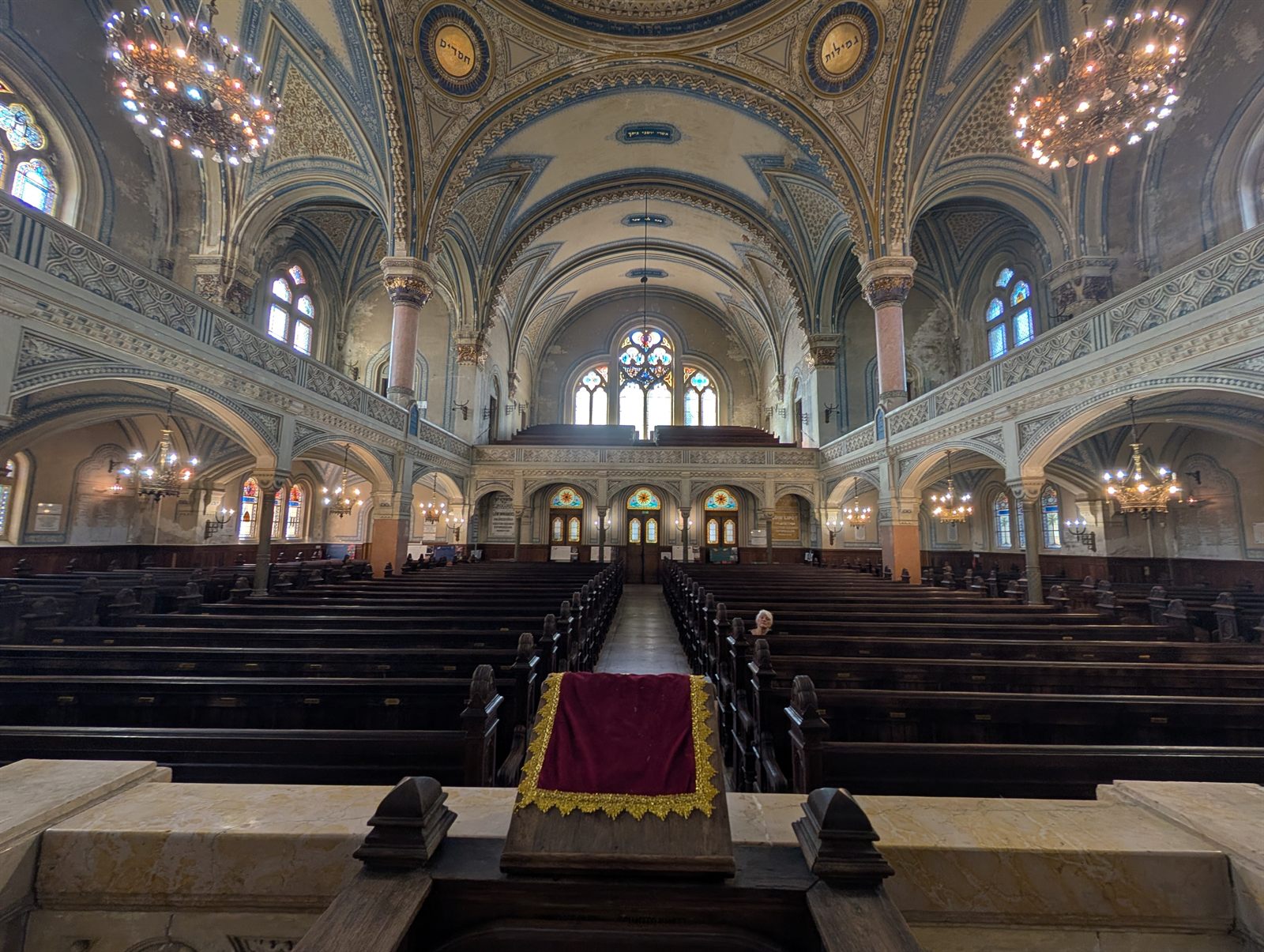
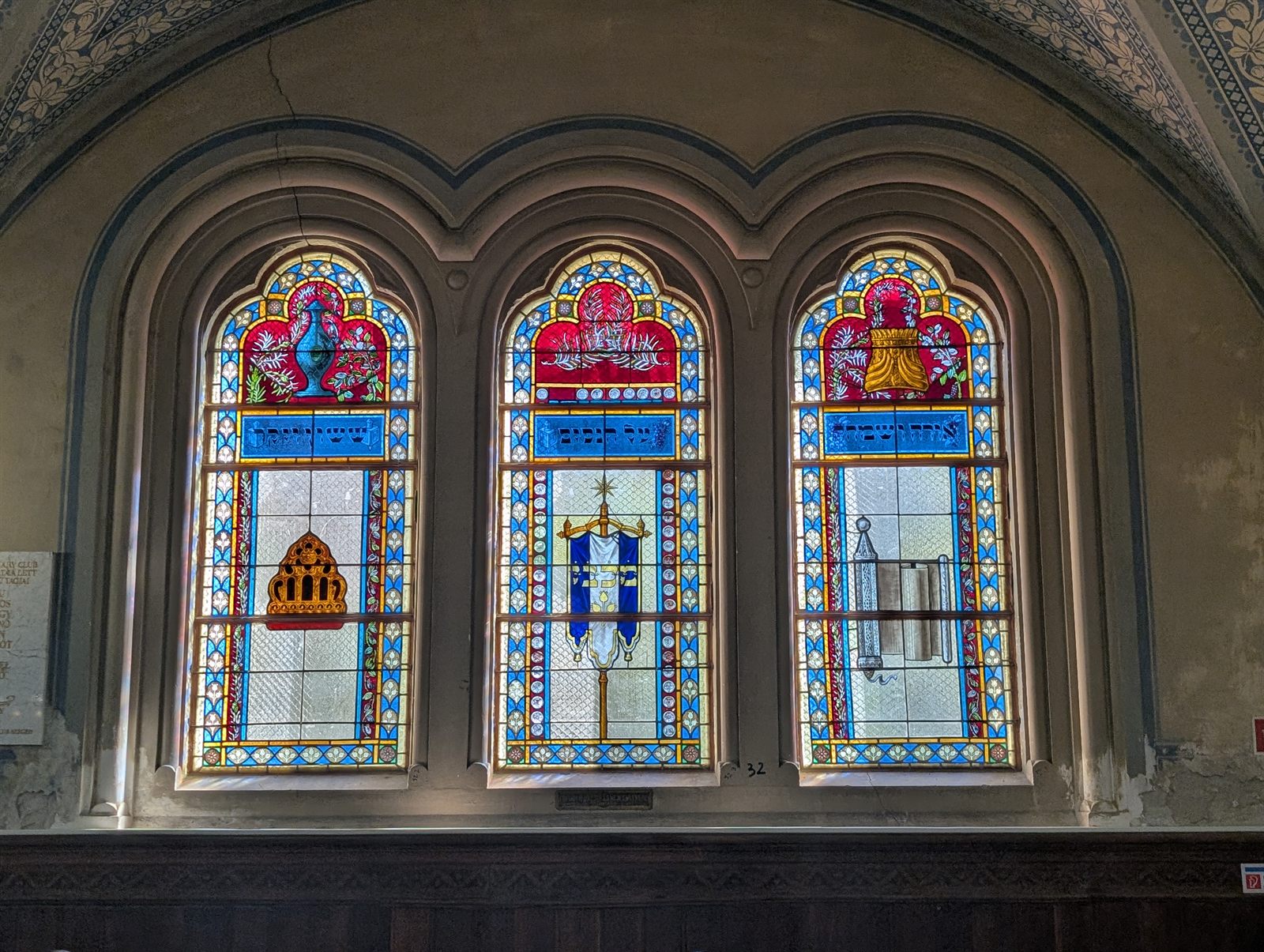
Baumhorn understood this instinctively. His synagogues are not modest buildings. They are designed to impress — soaring domes, richly ornamented facades, interiors flooded with colored light from enormous stained-glass windows. His style fused the historicist grandeur of the late Habsburg era with a distinctly personal touch: an exuberance of botanical Art Nouveau detail — flowers, vines, tendrils, peacock feathers — that gave even his most monumental buildings a feeling of warmth and organic life.
"Baumhorn's great insight was that a synagogue could be both a sacred space and a civic monument — a building that served God and at the same time told the city: we are here, we have arrived, we intend to stay."
Szeged: the masterpiece
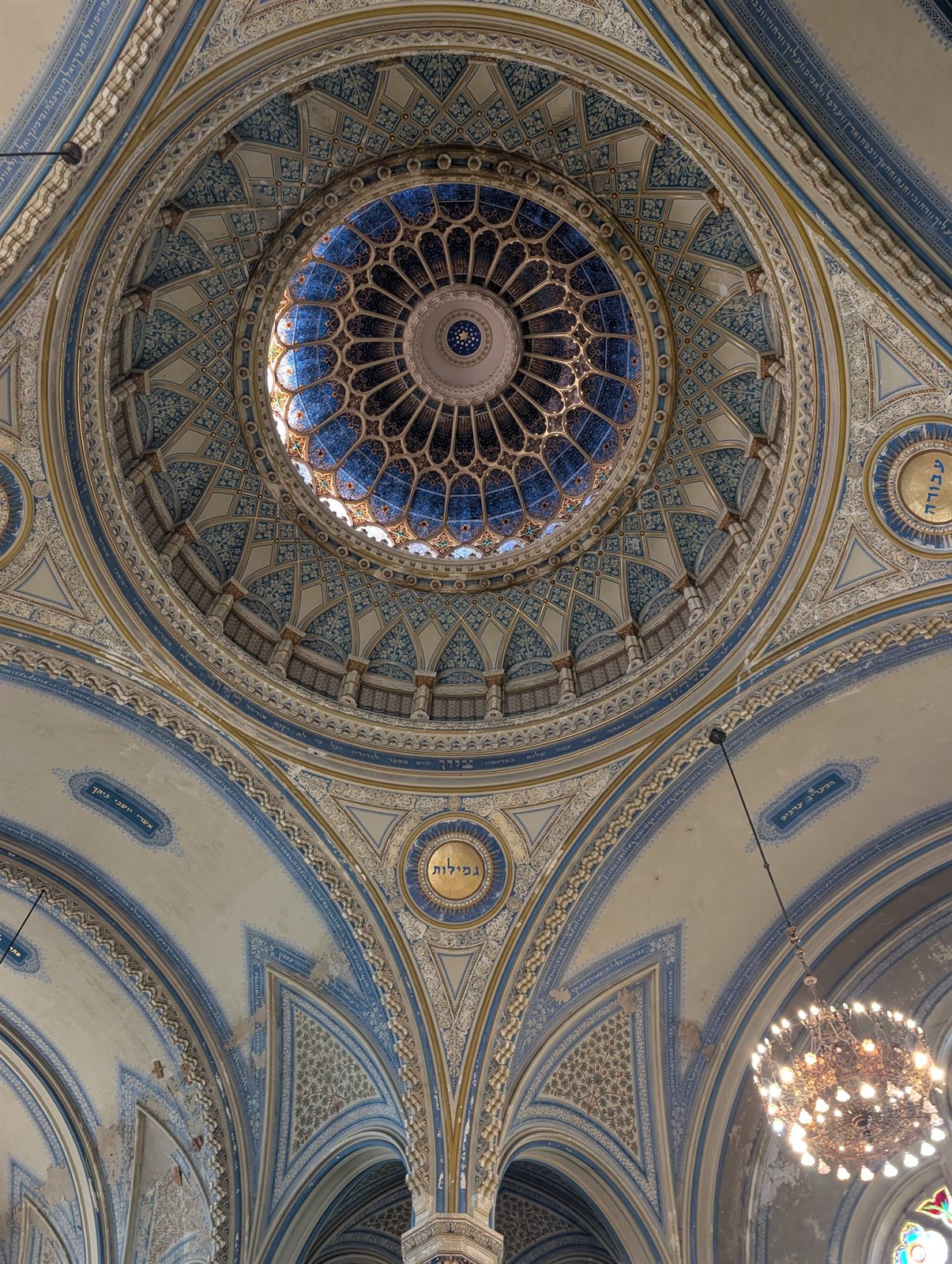
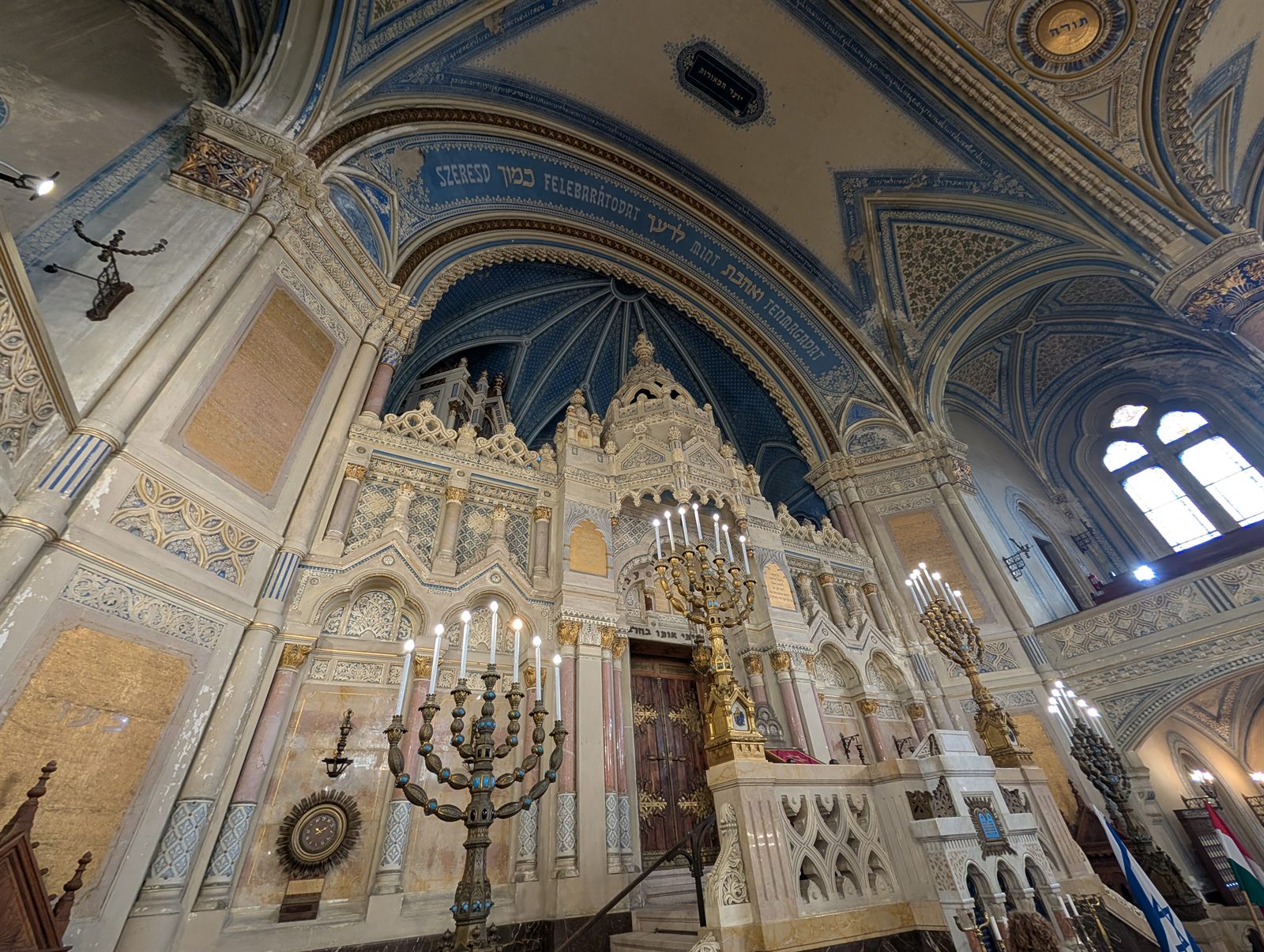
Baumhorn's greatest work is the New Synagogue in Szeged, completed in 1903. It is the second-largest synagogue in Hungary — after the Dohány Street Synagogue in Budapest — and by some counts the fourth-largest in the world. Its dome rises above the Szeged skyline like a declaration of permanence, and its interior is an extraordinary fusion of Art Nouveau naturalism with the traditional forms of synagogue architecture: a forest of painted columns, botanical stucco work of astonishing delicacy, and a vast stained-glass dome that fills the sanctuary with blue and gold light.
The Szeged synagogue was built for a community led by the celebrated Löw family of rabbis — progressive, cultured, deeply integrated into the civic life of the city. Its archive survived the war largely intact, one of the few in the region to do so, and today the building serves a double function: a place of worship for Szeged's small surviving community, and the city's principal memorial to the local victims of the Holocaust.
Across the empire
Beyond Szeged, Baumhorn's synagogues span the breadth of the former empire. In Timișoara, the Fabric Synagogue (1899) is among the most architecturally significant Jewish buildings in Romania — though its fragile condition has long been a source of concern. In Brașov, the Beth Israel Synagogue (1901) on Poarta Șchei Street blends Moorish and Gothic detail into one of Transylvania's loveliest synagogue interiors. In Novi Sad, his synagogue (1909) remains one of the city's most prominent landmarks. And in smaller towns — Szolnok, Esztergom, Lippa — his buildings gave even modest communities a sense of grandeur and permanence.
Not all of Baumhorn's synagogues survived. Some were destroyed during the war, others demolished in the decades that followed. Several stand empty, slowly decaying — the Fabric Synagogue in Timișoara chief among them. But a remarkable number have been restored or repurposed in recent years: as concert halls, cultural centers, museums, or — in a few cases — once again as places of Jewish worship.
The architecture of a lost world
What makes Baumhorn's work so poignant today is not just its beauty but its optimism. These were buildings designed by communities that believed they had a future — that the legal emancipation they had won was irreversible, that the prosperity they had built was secure, that the cities they had helped to shape would always be their home. Within half a century of the Szeged synagogue's completion, almost every community that Baumhorn built for had been destroyed.
His synagogues remain, scattered across four countries, as the most eloquent witnesses to what was lost. To walk into the Szeged sanctuary, to stand beneath its dome and look up into the blue and gold light, is to feel — for a moment — the confidence of a world that no longer exists. It is also, perhaps, to understand why these buildings matter so much to the descendants who return to see them: not as relics of a vanished past, but as proof that something extraordinary once stood here, and that it was built to last.
We visit Baumhorn synagogues on both our Budapest, Szeged & Tokaj, Timișoara & Oradea, Košice & Prešov tour (Szeged, Timișoara) and our Budapest & Maramureș, Transylvania & Bucharest tour (Brașov).