Siret sits at the northeastern edge of Romania, a quiet town of a few thousand people pressed against the Ukrainian border. For most visitors, it is a place to pass through. But for anyone tracing the roots of Jewish Bukovina, Siret is a place to stop — and to stay a while. Its Jewish cemetery, sprawling across a hillside on the outskirts of town, is one of the oldest surviving Jewish burial grounds in Eastern Europe, with gravestones dating to the sixteenth century.
The town itself was, for a brief period in the fourteenth century, the capital of the Principality of Moldavia. Jewish settlement here is documented from at least the sixteenth century, making Siret one of the earliest known sites of permanent Jewish life in the region. For generations, before the surrounding towns of Rădăuți, Suceava, and Câmpulung established burial grounds of their own, their dead were brought to Siret for burial. The cemetery thus served not just one community but an entire region — a fact that gives it an unusual density and breadth of inscriptions.
A library in stone
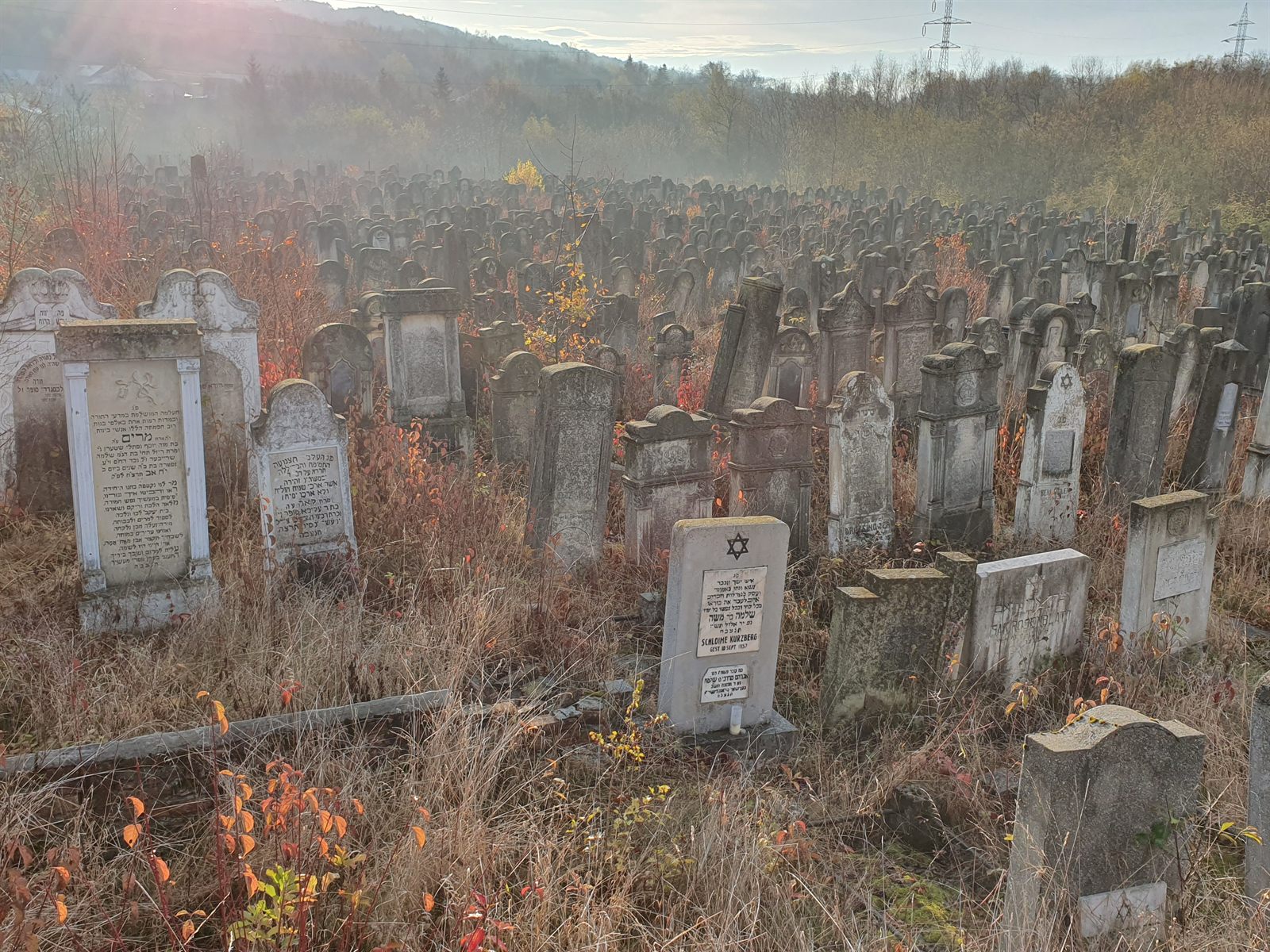
Walking through the cemetery at Siret is unlike visiting most Jewish burial grounds in Romania. The sheer age of the earliest stones — weathered, half-sunk into the earth, their Hebrew inscriptions barely legible — gives the place the feeling of an archaeological site as much as a cemetery. But the real treasures are the eighteenth- and nineteenth-century tombstones, carved with an artistry that has few parallels in the region.
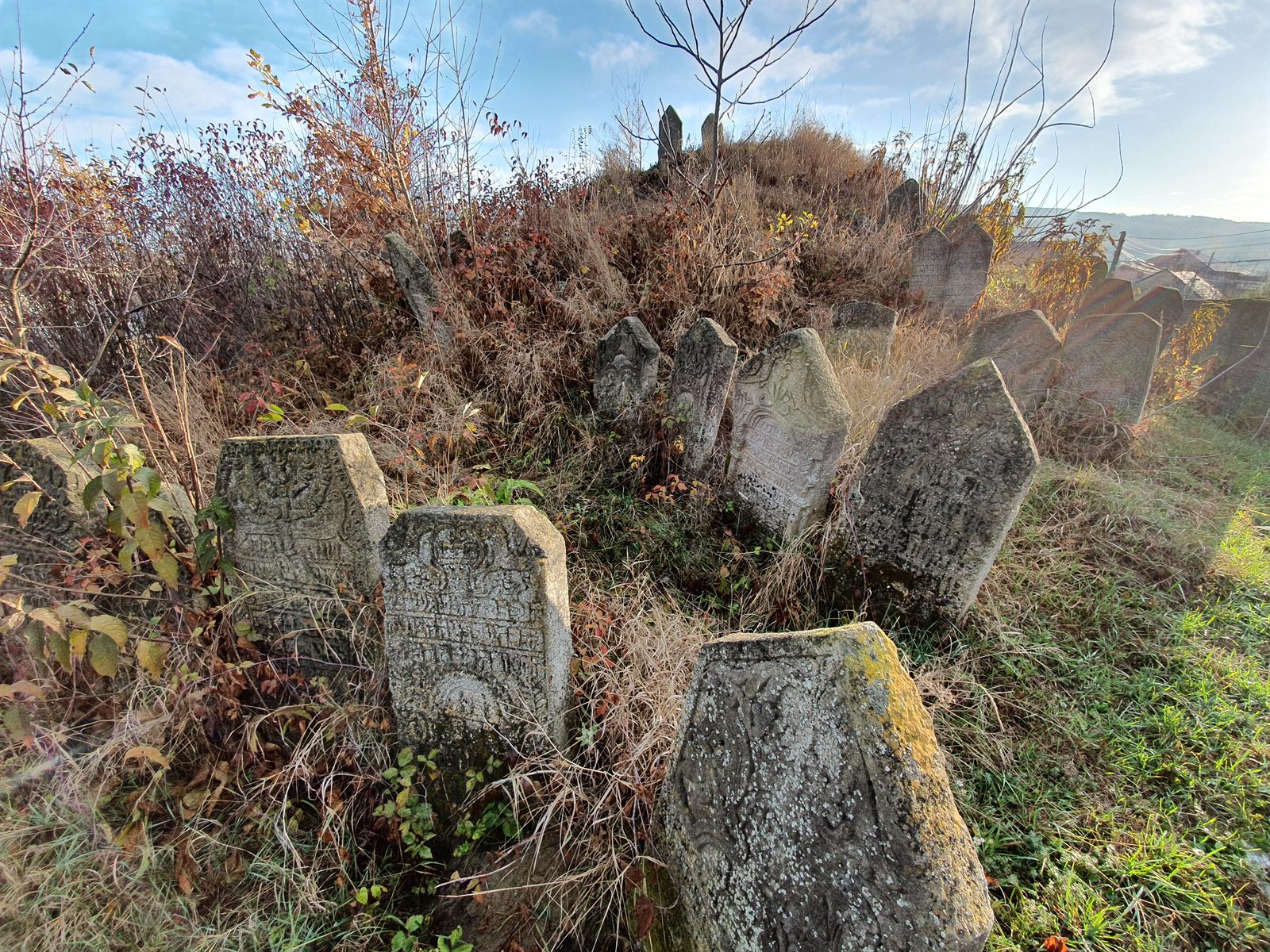
"The stone-carvers of Bukovina developed a visual language all their own — lions and eagles, menorahs and crowns, grapevines and hands raised in priestly blessing, all rendered with a folk artistry that combines deep religious symbolism with an almost naive beauty."
The motifs are rich and varied: the hands of the kohen raised in blessing, the pitcher of the Levite, the lion of Judah, the crown of Torah, trees of life with spreading branches, deer and eagles, candelabras and shofars. Many of the stones carry elaborate epitaphs — not just names and dates, but poetry, praise, and fragments of biography that offer glimpses into the lives of the people buried here: a charitable woman, a learned rabbi, a young man taken too soon.
The cemetery as archive
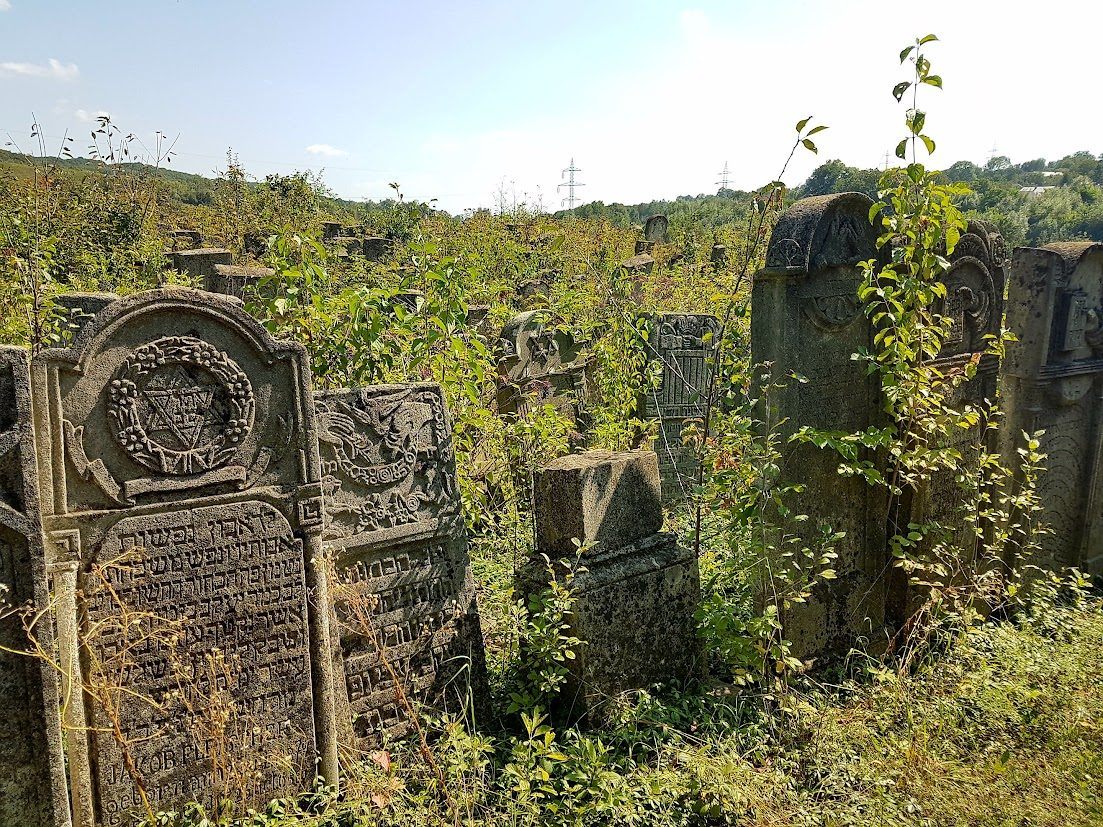
For families researching their Bukovinian Jewish roots, the cemetery at Siret is an irreplaceable resource. Because it served as a regional burial ground for so long, it contains the graves of families who later dispersed to Rădăuți, Suceava, Câmpulung Moldovenesc, and beyond. Genealogical researchers have spent years documenting and photographing the stones, and a significant portion of the cemetery has now been catalogued and made available in online databases — but nothing replaces the experience of standing before the stones themselves, tracing the carved letters with a fingertip, and reading the name of an ancestor who lived and died in this corner of Europe three or four centuries ago.
The cemetery is not well signposted and not always easy to find. A locked gate, a caretaker who must be contacted in advance, overgrown paths between the rows — this is not a manicured memorial but a living, weathering, slowly disappearing document. Parts of the oldest section are in serious danger of being lost to erosion and vegetation. Efforts to preserve and restore the most endangered stones are ongoing, but they depend almost entirely on the work of volunteers and descendants' associations, with little institutional support.
What survives
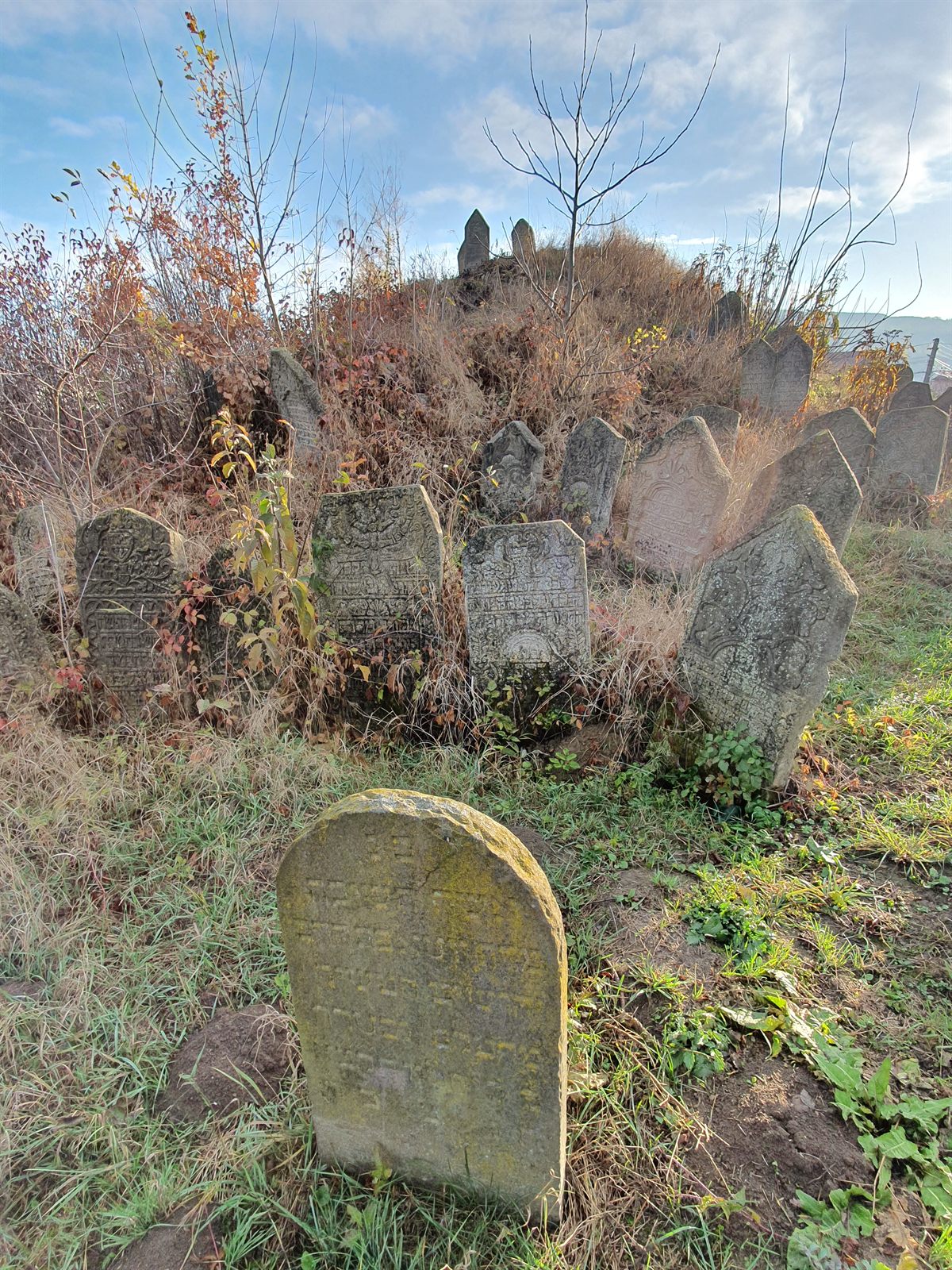
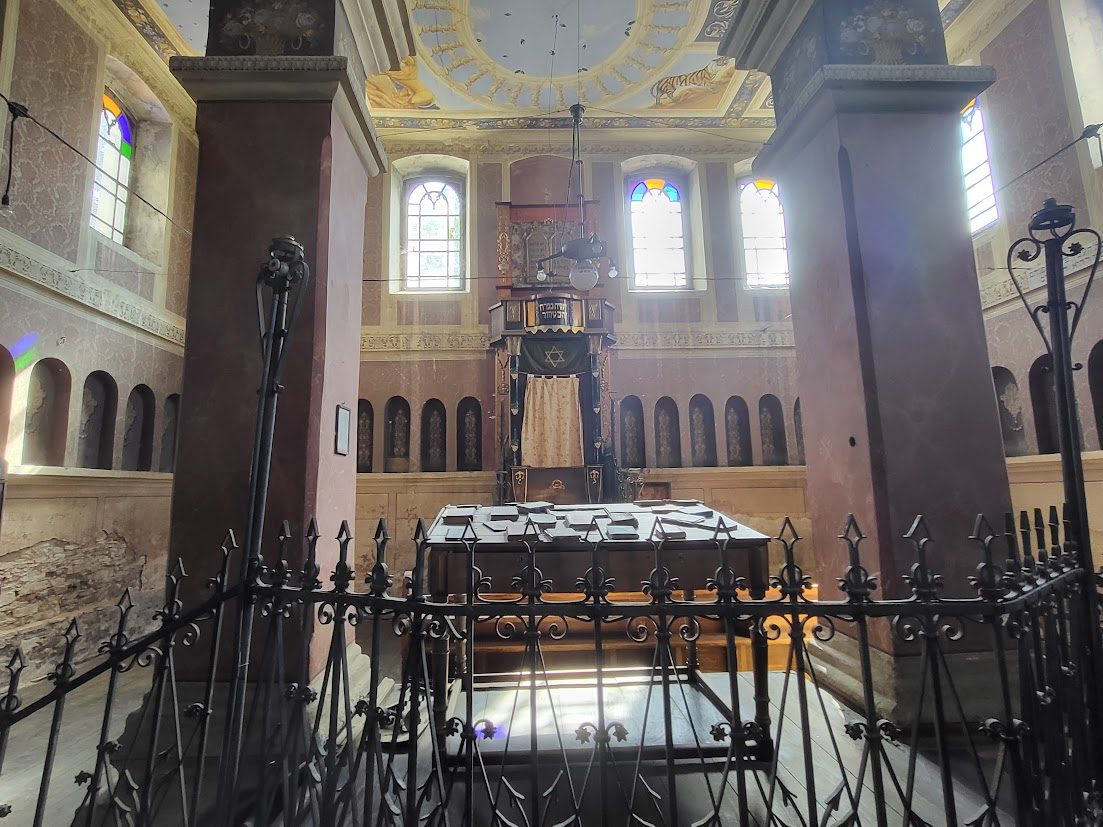
Siret's Jewish community itself is gone. The last Jews were deported to Transnistria in October 1941; only a fraction survived to return, and postwar emigration emptied the town of its remaining Jewish population within a generation. The synagogue still stands, but it is no longer active: its painted vaults, carved ark and iron-railed bimah wait in silence for a congregation that will not return. Together with the cemetery, it is the last physical evidence that Jews lived in this town continuously for more than four hundred years.
And yet the cemetery endures. The stones still stand, the inscriptions still speak, and every year a small but steady stream of visitors makes the journey to this remote border town to find the graves of their ancestors. For many, it is the most emotional moment of their entire trip — the place where family history ceases to be an abstraction and becomes a name carved in stone, on a hillside in Bukovina, under an open sky.
We visit the cemetery at Siret on Day 7 of our Moldavia, Bukovina & Kishinev/ Bessarabia group tour.